What is compound interest?
Compound interest is the process of earning interest on both the initial amount you invest (the principal) and the interest that accumulates over time. Unlike simple interest, which is calculated only on the principal, compound interest allows your savings or investments to grow much faster.
Formula for compound interest
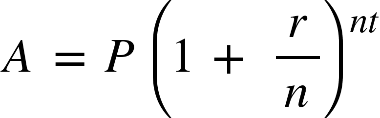
Where:
- A = Future value of the investment
- P = Initial investment (principal)
- r = Annual interest rate (as a decimal)
- n = Number of times interest is compounded per year
- t = Number of years
Example: If you invest $1,000 at an interest rate of 5% per year, compounded monthly, in 10 years your money will grow to approximately $1,647. This assumes you did not add any additional money each month.
How can I maximize my compound interest earnings?
- Start investing as early as possible.
- Contribute regularly to your savings or investment accounts.
- Choose accounts with more frequent compounding (e.g., daily or monthly).
- Learn more – read this book about compound interest: The Lost Science of Compound Interest
Learn more about compound interest
FAQ
What’s the difference between simple and compound interest?
Simple interest grows only from the original amount. Compound interest grows from the original amount plus prior interest — so growth accelerates over time.
Why does starting earlier matter so much?
Because time increases the number of compounding periods. More time often beats trying to “catch up” later with bigger contributions.
What does compounding frequency change?
More frequent compounding generally increases the result slightly in a pure maths model. In real investing, returns aren’t credited like bank interest, but the concept helps explain growth.
Is compounding the only thing that matters?
No. Contributions, time, fees, taxes, and behaviour (staying invested) all matter. Compounding is just the engine.
Where should I go next?
Try a calculator: Money Growth, Retirement, ETF vs Savings, or Start Late?